The Risks We Can See & the Risks We Cannot
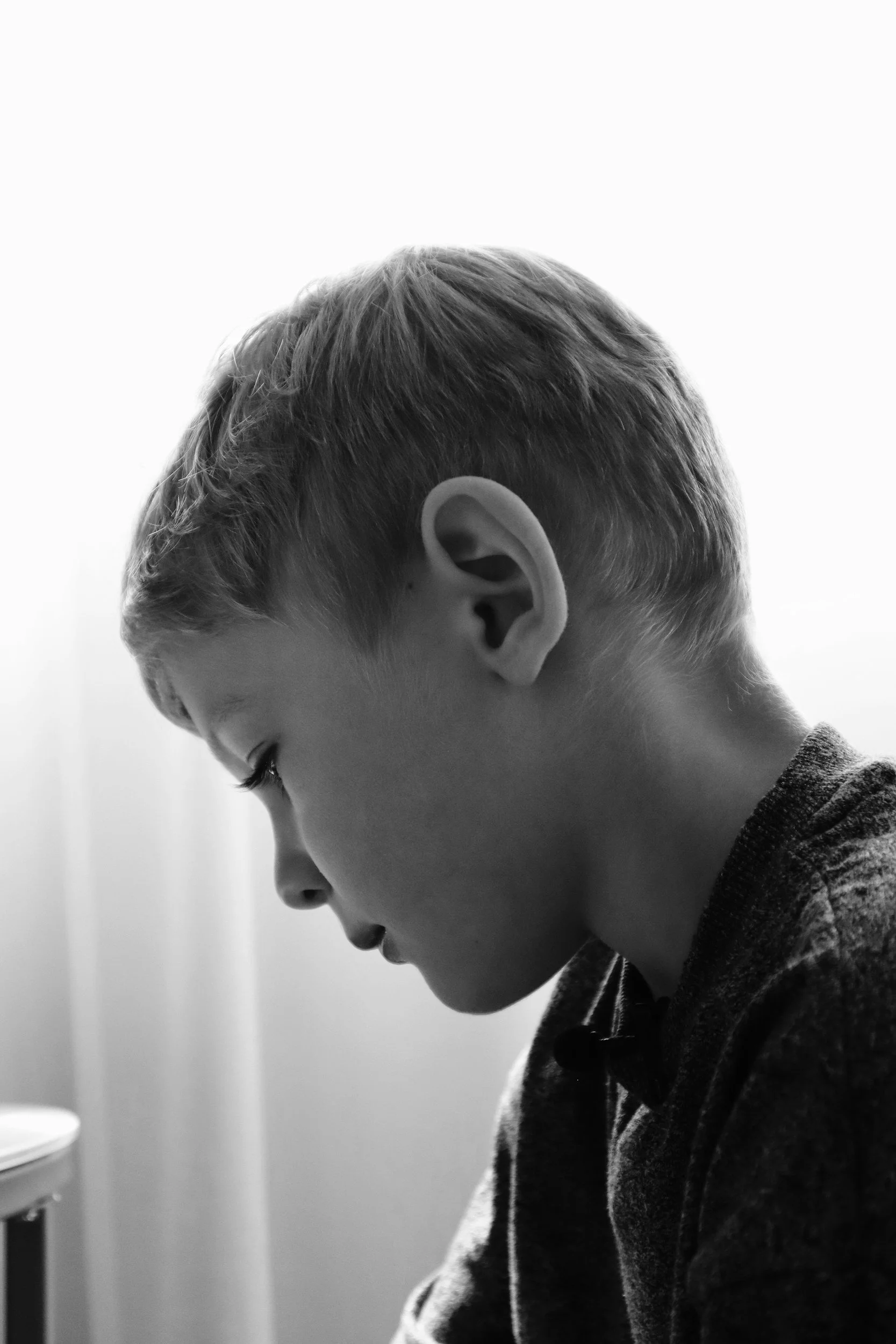
A child experiencing profound emotions.
When I was pregnant with my son Cade, I was handed a list of risks.
Heart defects.
Developmental delays.
Medical complications.
Therapies.
Educational challenges.
Possible surgeries.
Suddenly, I could see all the things that might go wrong.
That is one of the most powerful things about prenatal testing. It gives parents information. It identifies possibilities. It shines a light on certain risks before a baby is ever born.
But what I have thought about often since Cade's birth is this:
Every child comes with risk.
We simply do not get a report for most of them.
We cannot screen for addiction.
We cannot screen for depression.
We cannot screen for anxiety.
We cannot screen for bullying.
We cannot screen for loneliness.
We cannot screen for whether our child will struggle in school.
We cannot screen for whether our child will find purpose.
We cannot screen for whether they will be kind.
We cannot screen for whether they will feel loved.
We cannot screen for whether they will bring extraordinary joy to the people around them.
And we certainly cannot screen for the kind of human being they will become.
The Diagnosis Becomes the Lens
When a parent receives a Down syndrome diagnosis, the diagnosis can quickly become the lens through which they view the entire future.
Every concern is suddenly attached to the chromosome.
Every unknown feels connected to the diagnosis.
Every fear becomes louder.
During what the 1st Voice Project calls The Space Between—the period between diagnosis and decision—parents are often trying to process an enormous amount of information while imagining a future they cannot yet see.
And in that space, visible risks can become overwhelming.
A medical list can begin to feel like a prediction.
A statistic can begin to feel like destiny.
A diagnosis can begin to feel like the whole story.
But it is not the whole story.
The Risks That Never Came With a Test Result
Before Cade, my eldest son received an autism diagnosis at the age of 18 months. For those who are familiar with the condition, that is considered an early diagnosis - the signs were undeniable.
At the time, I was a first-time parent. I was terrified.
I wondered whether he would live independently.
Whether he would be happy.
Whether he would have friends.
Whether he would find love.
Whether people would judge him.
Whether I was strong enough to parent him well.
I remember feeling completely overwhelmed by the future I imagined.
But that future did not unfold the way fear told me it would.
Today, my son is bright, compassionate, funny, and uniquely himself. He has challenges, yes. But he also has strengths I never could have predicted.
That experience should have taught me that fear is not prophecy.
And yet, when I received Cade's diagnosis years later, I still found myself imagining another future built largely from fear.
That is how powerful diagnosis can be.
Even when we know better, fear can still write a story before reality has a chance to begin.
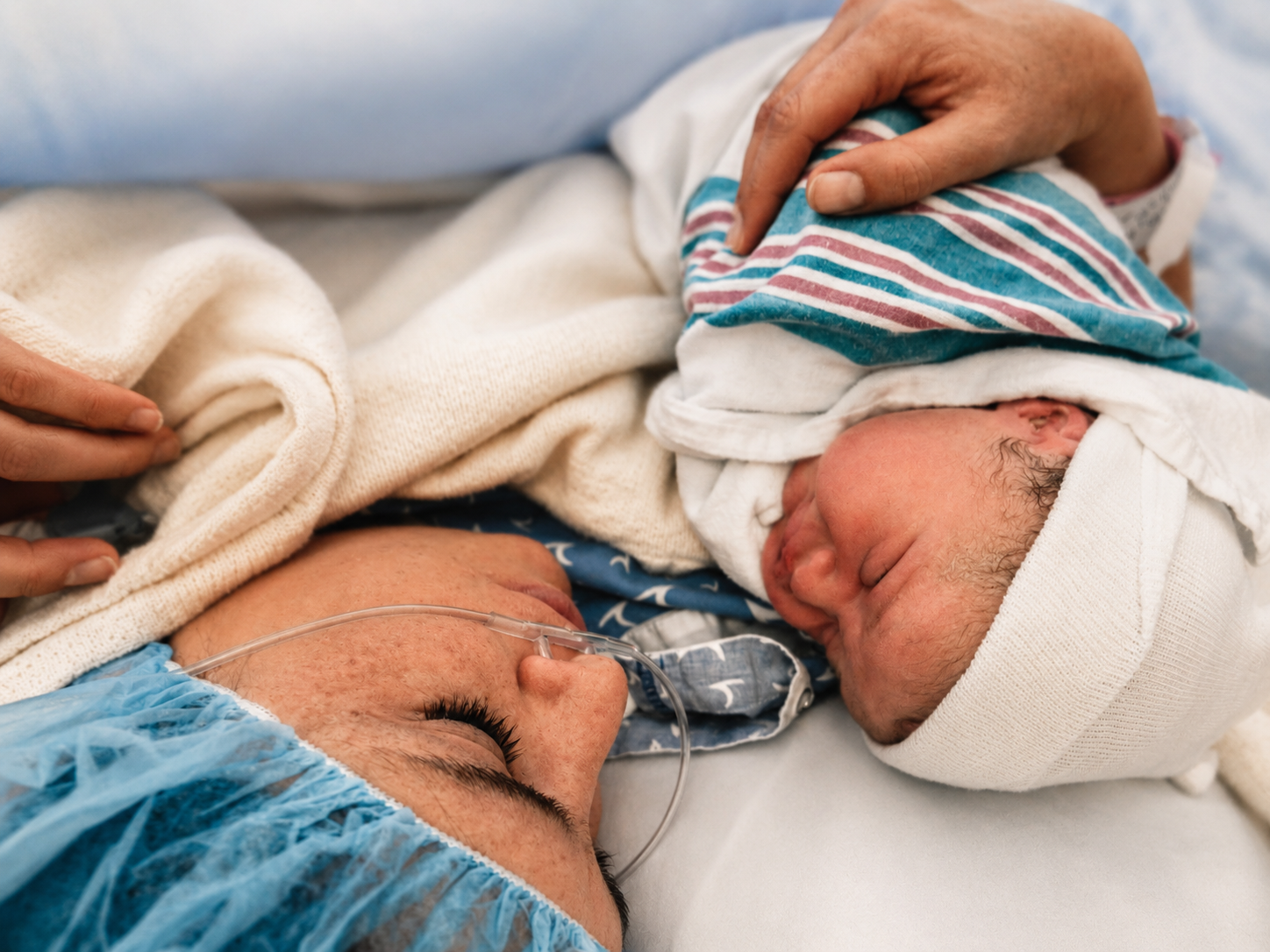
Me, moments after giving birth to my firstborn son.
Eighteen months later, he would be diagnosed with autism.
It was my first lesson that some of life's biggest challenges—and greatest gifts—don't come with a diagnosis at birth.
What Prenatal Testing Cannot Tell Us
Prenatal testing can tell us important things.
It can identify certain genetic conditions.
It can help families prepare.
It can guide medical care.
It can give doctors information that may matter before and after birth.
That information has value.
But there are also things prenatal testing cannot tell us.
It cannot tell us whether a child will light up a room.
It cannot tell us whether siblings will adore them.
It cannot tell us whether they will be funny, stubborn, affectionate, athletic, musical, curious, dramatic, gentle, or brave.
It cannot tell us whether they will change the way a family sees the world.
It cannot tell us whether they will make their parents better people.
It cannot tell us whether they will become the heart of a family.
And it cannot tell us whether the fears we carry during pregnancy will match the life we experience after birth.
Maybe There Are Worse Things We Cannot See
This is the thought I keep returning to.
When I received Cade's diagnosis, I was terrified because I could see the risks.
They had names.
They had statistics.
They had medical descriptions.
They had worst-case scenarios.
But what about the risks we cannot see?
What about raising a child who appears healthy on every prenatal test but later struggles deeply?
What about a child who faces mental illness, addiction, isolation, cruelty, or despair?
What about a child who succeeds by every worldly measure but never feels known, loved, or at peace?
What about a life that looks perfect on paper but lacks kindness, connection, or purpose?
These are not arguments against testing.
They are reminders of humility.
Because none of us can fully know what lies ahead for any child.
A diagnosis may reveal one kind of uncertainty.
It does not create uncertainty itself.
Parenthood was always uncertain.
The Danger of Seeing Only the Risk
The danger during The Space Between is that the visible risk can become the only thing parents see.
Down syndrome becomes the headline.
The child disappears behind the diagnosis.
The future becomes a list of possible complications.
And the unseen possibilities become almost impossible to imagine.
But a child is never only a risk profile.
A child is not a statistic.
A child is not a list of potential challenges.
A child is a person.
And people cannot be fully predicted before they are known.
What My Son Revealed
Cade did not erase uncertainty from our lives.
No child does.
But he revealed something I could not see during pregnancy.
He revealed that joy can exist alongside challenge.
That difference can bring beauty.
That siblings can become more compassionate.
That families can become more grounded.
That a child with a diagnosis can bring extraordinary meaning into the lives around him.
He revealed that the future I feared was not the only future possible.
And perhaps most importantly, he revealed that some of the most meaningful parts of life are the very things no test could ever measure.
A Question for The Space Between
If you are reading this after receiving a diagnosis, I do not want to minimize your fear.
Your fear is real.
Your questions are real.
Your uncertainty is real.
But I gently invite you to ask one more question:
Am I only seeing the risks I was shown?
Because there may be more to the story.
There may be possibilities you cannot yet imagine.
There may be support you have not yet found.
There may be families waiting to tell you what life actually looks like.
There may be joy beyond the fear.
And there may be a child behind the diagnosis who is so much more than the future you are currently afraid of.
That is why the 1st Voice Project exists.
To better understand what happens during The Space Between.
To listen to families.
To study how diagnosis experiences shape perceptions.
And to remind us that the human story is always larger than the medical one.
A note from 1st Voice Project:
If you’ve just received a positive prenatal screening test result, please visit our page for resources and support. If you’d like to talk, feel free to reach out.
If you’ve received a prenatal diagnosis, the 1st Voice Project would love to hear your thoughts and experiences. Please take a few minutes to contribute to our work by completing our survey.
Related articles:
10 Things I Wish Someone Told Me when I was pregnant
The Space Between: What Happens Between Diagnosis and Decision?
What I Expected vs. What I Experienced Raising a Child with Down Syndrome
Why Parents Remember the Diagnosis Conversation for Years
Outdated Stereotypes That Still Shape Modern Down Syndrome Diagnoses
The Down Syndrome Generation No One Predicted
What happens after a positive NIPT test?
The First-Time Parent Paradox: Why a Down Syndrome Diagnosis May Feel Different When You've Never Been a Parent Before
Sibling & Family Relationships: Understanding the Weight of the Word "Burden" & Down Syndrome
Help other families find balanced information by sharing this article.