The Unique Power of Genetic Proof
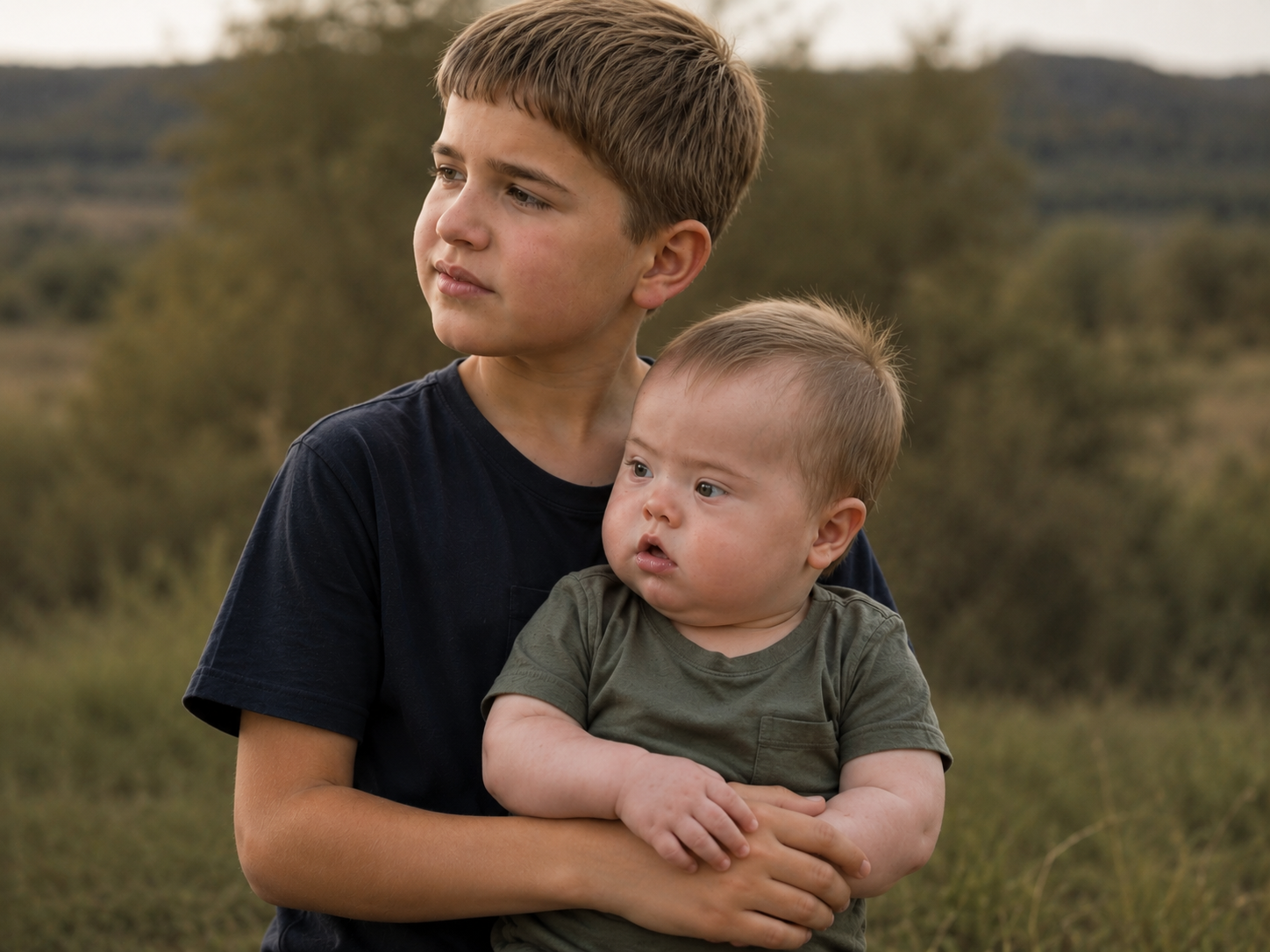
Two brothers, one with autism and the other with Down Syndrome, each with a condition. One is visible, while the other is not.
When my oldest son was diagnosed with autism, I was devastated.
Like many parents, I found myself searching for answers.
What did this mean for his future?
Would he be independent?
Would he have friends?
Would he be happy?
As the years passed, I became increasingly involved in autism communities. I met wonderful families, passionate advocates, dedicated professionals, and autistic individuals who helped me better understand a world I knew very little about.
Then, years later, I entered a different world.
The world of Down syndrome.
One of the very first things I noticed was how close-knit the community seemed to be.
In fact, the physician who delivered my son's diagnosis mentioned it.
"You'll find the Down syndrome community is very supportive."
At the time, I assumed that support came from difficulty.
I assumed people were bonded by shared challenges.
But the longer I remained in the community, the more I realized that wasn't quite right.
What I saw instead was something deeper.
I saw tremendous love.
Respect.
Pride.
Advocacy.
Protectiveness.
A shared desire to defend and support a group of people who are still widely misunderstood.
And it made me wonder:
Why does the Down syndrome community often feel so unified?
And why does the autism community sometimes feel different?
A Question I've Been Sitting With
There are many possible explanations.
The Down syndrome community is smaller.
Autism diagnoses have increased dramatically over the last several decades.
Autism exists across an incredibly broad spectrum of experiences and support needs.
People with Down syndrome often share physical characteristics that make their diagnosis visible.
Autism is frequently invisible.
All of these factors likely matter.
But I have found myself wondering if there might be something else happening as well.
Something more psychological.
Something related to the nature of diagnosis itself.
The Difference Between Suspicion and Certainty
Autism often begins with questions.
Parents wonder if something is different.
Teachers notice concerns.
Family members disagree.
Evaluations are pursued.
Sometimes diagnoses are accepted.
Sometimes they are challenged.
Sometimes they are delayed.
Sometimes they are avoided altogether.
Even after diagnosis, families may hold very different beliefs about what autism means.
Some embrace the label.
Some reject it.
Some view autism as a disability.
Others view it primarily as a difference.
Some seek interventions.
Others prefer neuroaffirming approaches.
The diagnosis itself can become a point of disagreement.
Down syndrome feels different.
Not because parents experience less grief.
Not because the journey is easier.
But because there is very little ambiguity.
A chromosome analysis leaves little room for debate.
A child either has an extra chromosome or they do not.
There is no waiting for a future evaluation.
No wondering whether a diagnosis is accurate.
No questioning whether concerns are valid.
The diagnosis arrives with certainty.
And perhaps certainty changes things.
The Power of Shared Reality
I wonder if one of the reasons the Down syndrome community feels so connected is because families begin from a shared reality.
The diagnosis is undeniable.
The chromosome report does not care about our beliefs.
It does not negotiate.
It does not leave much room for interpretation.
Parents may react differently.
They may grieve differently.
They may parent differently.
But they are often beginning from the same foundational truth.
And perhaps that shared truth creates something powerful.
Acceptance.
Connection.
Community.
A common language.
A common starting point.
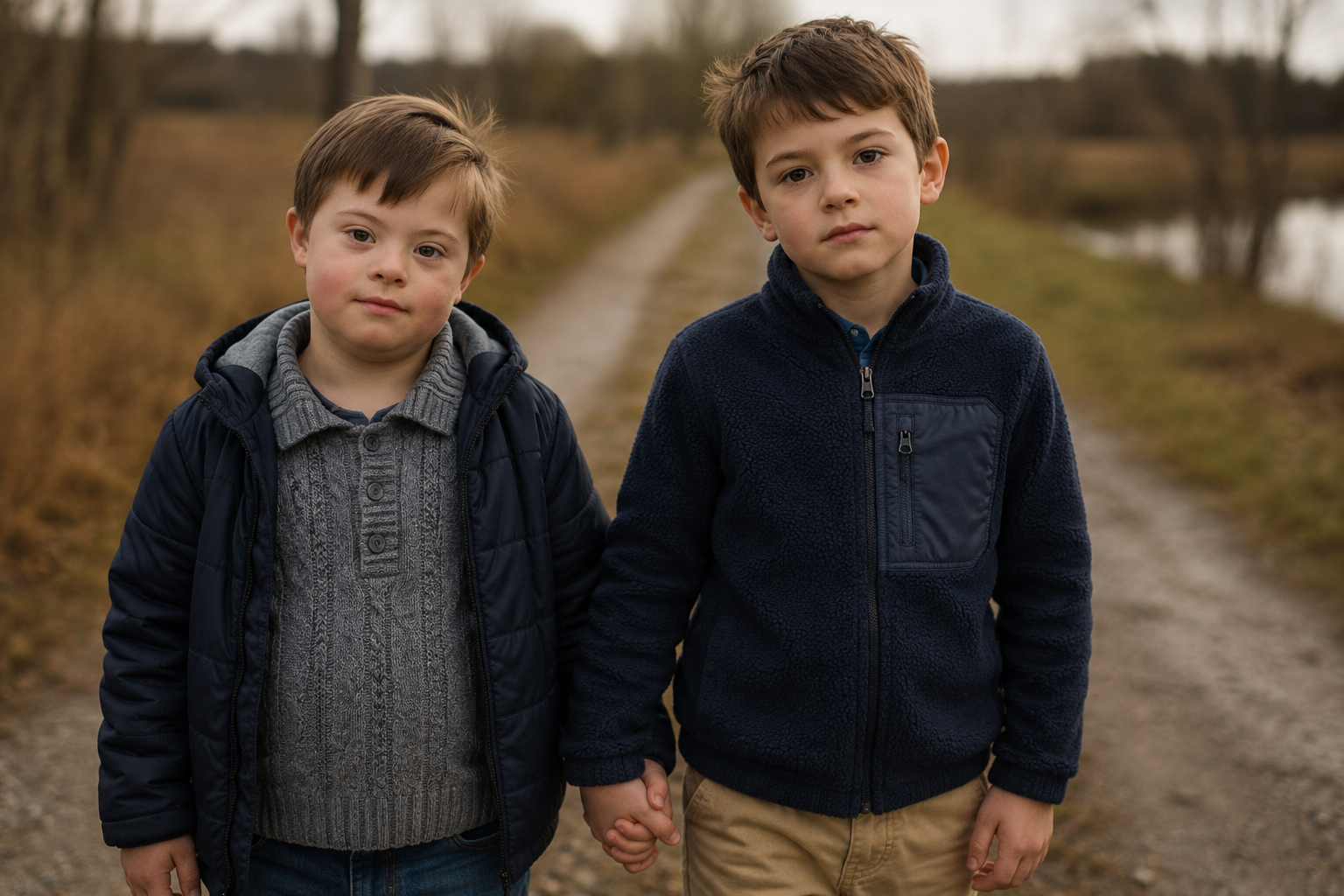
Twin brothers, one with autism and the other with Down syndrome. One visible, the other not.
When We Can No Longer Look Away
One of the hardest parts of receiving a Down syndrome diagnosis is that it often forces parents to confront realities they may not be ready to face.
There is no hiding.
No delaying.
No pretending nothing has changed.
And while that can be painful, I sometimes wonder whether it also creates opportunities for growth.
Parents are forced to ask difficult questions.
They are forced to seek information.
They are forced to connect.
They are forced to reconsider assumptions they may have held about disability.
In many ways, they are forced onto a path.
Not the path they expected.
But a path shared by many others who have walked it before them.
A Thought Worth Exploring
I do not know if genetic certainty explains the strength of the Down syndrome community.
Perhaps it is only one piece of a much larger puzzle.
But I think the question is worth asking.
Could certainty influence acceptance?
Could acceptance influence connection?
Could connection influence advocacy?
Could advocacy influence community?
And if so, what might that teach us about how families navigate diagnosis, identity, and belonging?
The more time I spend studying diagnosis experiences, the more I find myself returning to a simple idea:
Human beings do not just respond to conditions.
We respond to certainty.
And perhaps there is something uniquely powerful about a diagnosis that leaves no room for doubt.
Not because certainty removes fear.
But because certainty may be the first step toward acceptance.
And acceptance may be the first step toward community.
A note from 1st Voice Project:
If you’ve just received a positive prenatal screening test result, please visit our page for resources and support. If you’d like to talk, feel free to reach out.
If you’ve received a prenatal diagnosis, the 1st Voice Project would love to hear your thoughts and experiences. Please take a few minutes to contribute to our work by completing our survey.
Related articles:
10 Things I Wish Someone Told Me when I was pregnant
The Space Between: What Happens Between Diagnosis and Decision?
What I Expected vs. What I Experienced Raising a Child with Down Syndrome
Why Parents Remember the Diagnosis Conversation for Years
Outdated Stereotypes That Still Shape Modern Down Syndrome Diagnoses
The Down Syndrome Generation No One Predicted
What happens after a positive NIPT test?
The First-Time Parent Paradox: Why a Down Syndrome Diagnosis May Feel Different When You've Never Been a Parent Before
Sibling & Family Relationships: Understanding the Weight of the Word "Burden" & Down Syndrome
Help other families find balanced information by sharing this article.