The Outdated Stereotypes That Still Shape Modern Down Syndrome Diagnoses
Hello, World!
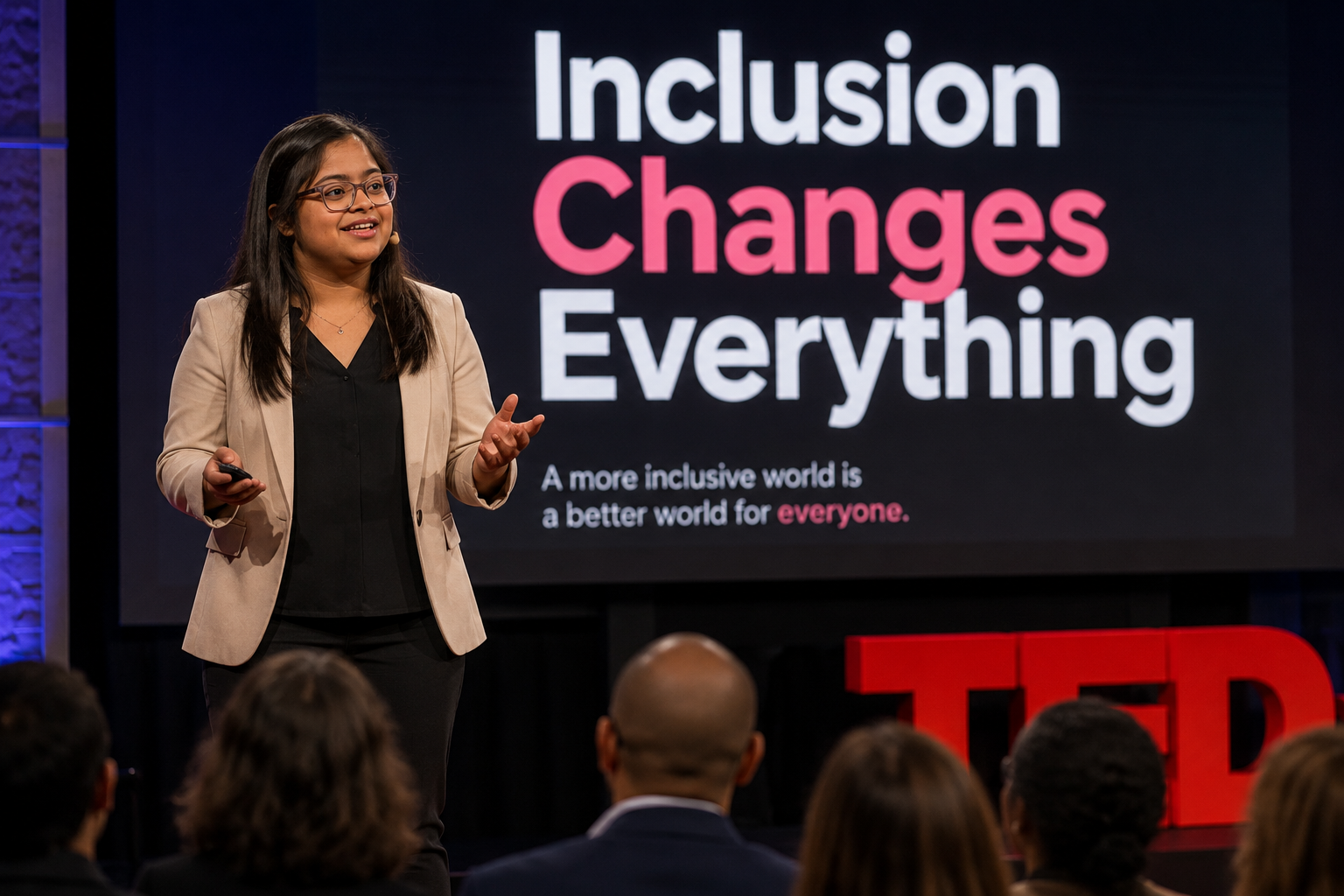
Woman with Down Syndrome proudly presents on the topic of inclusion.
When most people hear the words "Down syndrome," what image comes to mind?
For many, the answer isn't based on a child they know.
It isn't based on a neighbor, a coworker, a friend, or a family member.
It's often based on something much older.
A stereotype.
An image inherited from a previous generation.
A story they heard years ago.
A perception shaped by a world that no longer exists.
And that raises an important question:
Have our perceptions of Down syndrome evolved as quickly as the lives of people with Down syndrome themselves?
As a parent and researcher, I think this question deserves serious attention.
Because when families receive a diagnosis today, they are making decisions about a child who will grow up in the modern world—not the world of decades past.
A History Worth Remembering
To understand where we are today, we first need to understand where we came from.
Not long ago, life looked very different for people with Down syndrome.
Many children were institutionalized.
Families were often encouraged to place their children in specialized facilities rather than raise them at home.
Educational opportunities were limited.
Employment opportunities were rare.
Medical care was far less advanced.
Life expectancy was dramatically shorter.
For many families, the diagnosis itself carried assumptions about dependency, limitation, and isolation.
Some of those assumptions were rooted in genuine challenges.
Others were rooted in a lack of opportunity.
And many were rooted in a society that simply had not yet learned how to include people with disabilities.
The World Changed
But then something remarkable happened.
Medicine improved.
Education evolved.
Advocacy grew stronger.
Families began sharing their stories.
Individuals with Down syndrome became visible.
They attended school.
Held jobs.
Graduated from college.
Became actors, artists, athletes, business owners, public speakers, advocates, and influencers.
They formed friendships.
Fell in love.
Got married.
Traveled the world.
Built meaningful lives.
And little by little, they shattered assumptions that had existed for generations.
The problem is that stereotypes often outlive reality.
The Shadow of Old Assumptions
Human beings naturally rely on mental shortcuts.
Psychologists call them schemas.
They're the stories and assumptions we carry about people, places, and experiences.
They help us process information quickly.
But they can also cause us to hold onto outdated beliefs long after the world has changed.
Down syndrome may be one example.
Because while modern opportunities have expanded dramatically, many of the fears expectant parents report after diagnosis sound remarkably similar to fears that existed decades ago.
Will my child have a meaningful life?
Will they be accepted?
Will they contribute?
Will they be happy?
Will they be loved?
Will they always depend on me?
These questions are understandable.
But they often originate from assumptions that deserve closer examination.
Could Historical Perceptions Influence Modern Diagnoses?
This is one of the questions we are exploring through the 1st Voice Project.
Not because we believe doctors are intentionally biased.
Far from it.
Most healthcare providers care deeply about their patients and work incredibly hard to provide accurate information.
But healthcare professionals are also human beings.
Like all of us, they have been shaped by the culture, education, experiences, and narratives surrounding them.
If society has carried certain assumptions about Down syndrome for generations, is it possible that some of those assumptions still influence how diagnoses are framed today?
Is it possible that some information is emphasized more heavily than other information?
Is it possible that risk is easier to discuss than potential?
Challenge easier to discuss than opportunity?
Statistics easier to discuss than lived experience?
These are not accusations.
They are questions.
And questions are where research begins.
The People Who Changed the Narrative
One of the most powerful forces reshaping perceptions of Down syndrome is visibility.
Today, people with Down syndrome are telling their own stories.
They are creating content.
Building businesses.
Advocating for themselves.
Leading organizations.
Speaking on stages.
Educating communities.
Influencing public policy.
And perhaps most importantly, they are allowing the world to see them as individuals rather than diagnoses.
Every time a person with Down syndrome shares their voice, another stereotype loses power.
Every time someone sees a child with Down syndrome thriving in school, playing sports, creating art, making friends, or chasing dreams, the narrative shifts.
Not because challenges disappear.
But because humanity becomes visible.
Seeing People, Not Predictions
One of the greatest lessons my son Cade has taught me is how dangerous it can be to confuse a diagnosis with a destiny.
A diagnosis can tell us certain things.
It can identify challenges.
It can help us prepare.
It can guide medical care.
But it cannot tell us who a person will become.
It cannot tell us what they will love.
What they will contribute.
Who they will inspire.
What relationships they will build.
Or how profoundly they may impact the lives around them.
Those things can only be discovered through living.
A New Lens for a New Generation
The children being born today with Down syndrome are entering a world unlike any generation before them.
They have access to better medicine.
Better educational supports.
Better technology.
Greater inclusion.
Stronger advocacy.
And more opportunities than previous generations could have imagined.
Perhaps the question is no longer whether society should update its perceptions of Down syndrome.
Perhaps the question is whether our systems, institutions, and conversations have updated theirs.
Because every diagnosis begins with a story.
And the stories we tell matter.
If we want families to make informed decisions, they deserve information that reflects the realities of today—not simply the assumptions of yesterday.
The world has changed.
People with Down syndrome have helped change it.
Maybe it's time our perceptions caught up.
"Did outdated assumptions influence your diagnosis experience? Share your story with the 1st Voice Project."
Related articles:
10 Things I Wish Someone Told Me when I was pregnant
The Space Between: What Happens Between Diagnosis and Decision?
The Seven Fears Many Parents Carry During "The Space Between"
What I Expected vs. What I Experienced Raising a Child with Down Syndrome
Why Parents Remember the Diagnosis Conversation for Years
Outdated Stereotypes That Still Shape Modern Down Syndrome Diagnoses
Help other families find balanced information by sharing this article.