The Down Syndrome Generation No One Predicted
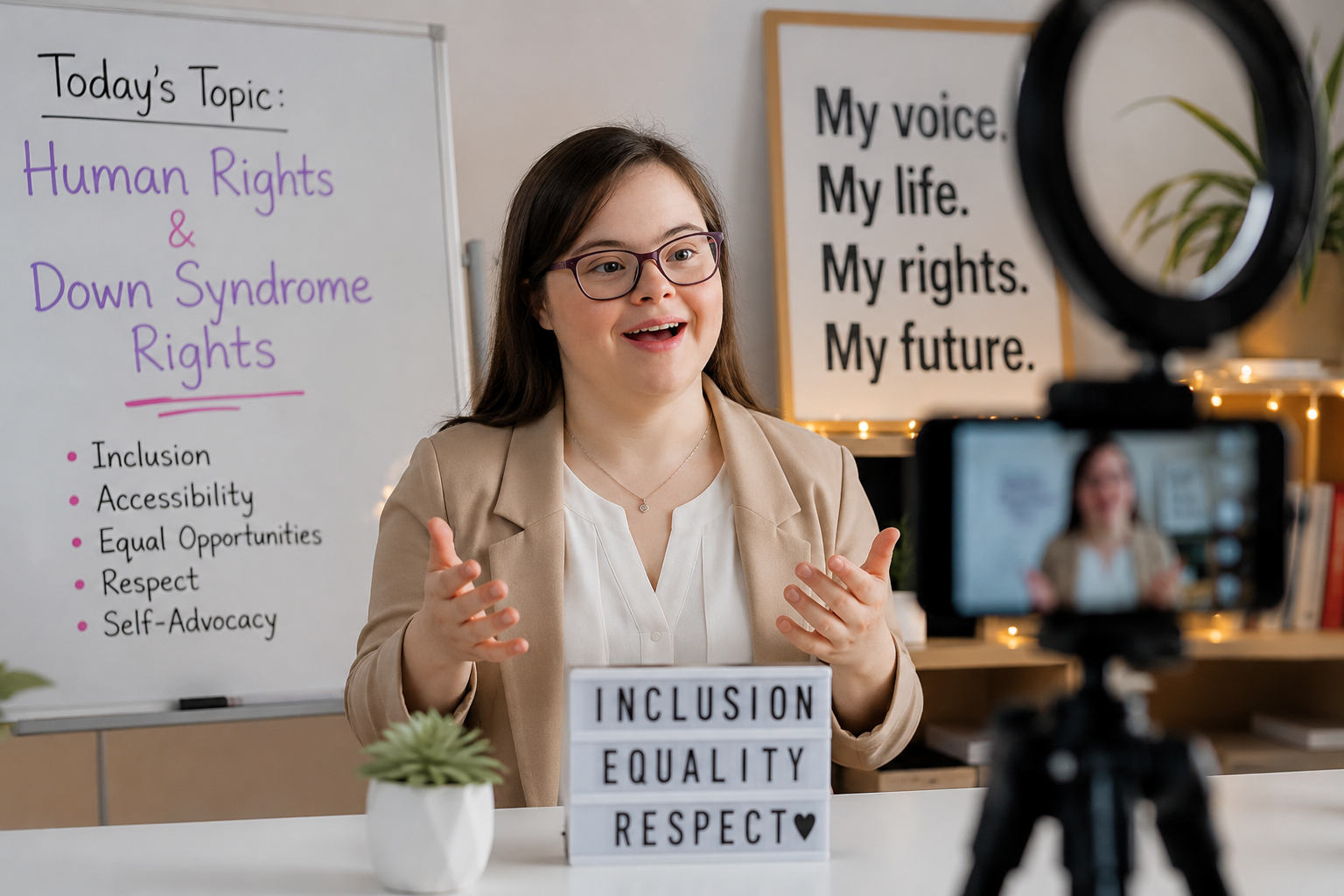
How Modern Medicine, Technology, and Inclusion Are Changing What's Possible
When many people hear the words "Down syndrome," the image that comes to mind is often rooted in the past.
It's understandable.
Many of the perceptions surrounding Down syndrome were formed decades ago, when medicine was less advanced, educational opportunities were limited, and people with disabilities were often separated from their communities rather than included in them.
But here's the question I keep coming back to:
Are we evaluating today's children with Down syndrome using yesterday's assumptions?
As a parent, advocate, and researcher, I believe this is one of the most important conversations we can have.
Because the reality is that children born with Down syndrome today are entering a completely different world than previous generations.
And that matters.
A Different Beginning Than Previous Generations
When my son Cade was diagnosed, much of the information I encountered focused on potential medical complications, developmental delays, and challenges.
Those challenges are real and deserve honest discussion.
But what often gets overlooked is how dramatically the world has changed.
Only a few generations ago, many babies born with Down syndrome faced obstacles that had little to do with the extra chromosome itself and everything to do with the limitations of medicine at the time.
Congenital heart defects that are routinely corrected today were once life-threatening.
Premature infants had far fewer options for support.
Specialized pediatric care was limited.
Many families were encouraged to institutionalize their children rather than raise them at home.
As a result, much of society's understanding of Down syndrome was shaped by outcomes that reflected the era, not the potential of the individual.
Today, that reality looks very different.
Children who once might not have survived infancy are now thriving because of advances in neonatal care, pediatric cardiology, surgery, and specialized medicine.
Life expectancy has increased dramatically.
Families have access to resources that previous generations could never have imagined.
The diagnosis may be the same.
The world surrounding that diagnosis is not.
The Power of Early Intervention
One of the greatest gifts modern families receive is access to early intervention services.
When a child is born with Down syndrome today, support often begins almost immediately.
Speech therapists.
Occupational therapists.
Physical therapists.
Developmental specialists.
These professionals help families address challenges early and build skills during the most important developmental years.
Instead of waiting for problems to emerge, we now work proactively to support growth and development.
For many parents receiving a diagnosis, this is information they rarely hear during those first difficult conversations.
The focus is often on what could be challenging.
Less attention is given to the extraordinary systems that now exist to help children succeed.
Inclusion Changed Everything
Perhaps one of the most significant changes has been inclusion.
Not long ago, many individuals with Down syndrome were educated separately from their peers.
Their opportunities were limited before they ever had the chance to demonstrate what they were capable of.
Today, many children with Down syndrome attend neighborhood schools, participate in sports, join clubs, attend camps, perform in theater productions, hold jobs, and contribute to their communities.
My son is not growing up isolated from the world.
He is growing up in it.
And so are thousands of other children.
The more society interacts with individuals with Down syndrome, the more outdated stereotypes begin to fade.
People stop seeing a diagnosis.
They start seeing a person.
Technology Is Leveling the Playing Field
If medicine transformed survival, technology may transform opportunity.
Many of the barriers people once associated with intellectual disabilities were connected to communication, learning, and access to information.
Technology is rapidly changing all three.
Children who struggle with speech can use communication devices.
Students who have difficulty writing can use speech-to-text software.
Visual learners can access personalized educational tools.
Parents can connect instantly with support communities around the world.
Information that once required a library can now be accessed from a phone.
For the first time in history, many of the practical barriers that once limited participation are becoming smaller and smaller.
And we are only at the beginning.
Why Artificial Intelligence Could Be a Game Changer
As a parent, I am particularly fascinated by what artificial intelligence may mean for people with Down syndrome and other disabilities.
For much of modern history, success was often measured by traditional academic skills.
Reading speed.
Writing ability.
Mathematics.
Memorization.
Grammar.
Composition.
These skills are important, but they are not the only measures of human potential.
AI is beginning to shift that reality.
Imagine a person who has incredible ideas but struggles to organize their thoughts into writing.
Imagine someone who is highly creative but needs support with communication.
Imagine a future where technology helps bridge those gaps.
AI can already help people write, brainstorm, create presentations, build websites, organize information, and express ideas.
For many individuals with learning differences, these tools may become powerful equalizers.
The future may belong less to those who can perform every task independently and more to those who can think creatively, solve problems, build relationships, and contribute meaningful ideas.
Those are areas where many people with Down syndrome already shine.
Are We Measuring Potential Using an Outdated Standard?
One thing I have learned through parenting Cade is that expectations matter.
The expectations we hold shape how we see the future.
And the future many people imagine when they hear "Down syndrome" is often based on assumptions that are decades old.
But today's children are not growing up in yesterday's world.
They are growing up with advanced medicine.
Inclusive education.
Specialized therapies.
Global support communities.
Assistive technologies.
And emerging tools that previous generations never had access to.
What happens when we combine all of those advances with a generation of children who have been loved, supported, educated, and included from the very beginning?
I don't think we fully know the answer yet.
And that's exciting.
Looking Forward
My son Cade is part of a generation that history has never seen before.
A generation benefiting from medical advances that save lives.
Educational systems that support learning.
Communities that promote inclusion.
Technologies that remove barriers.
And families who increasingly believe in possibility rather than limitation.
When I received my diagnosis, I was given many reasons to be afraid.
Very few people talked about the opportunities.
Very few people talked about how rapidly the world was changing.
Very few people talked about what might be possible.
I believe the next generation of individuals with Down syndrome will surprise us.
Not because they are different than previous generations.
But because the world around them is different.
And when society removes barriers, provides support, and creates opportunity, remarkable things become possible.
Perhaps the most important question isn't what people with Down syndrome are capable of.
Perhaps the better question is:
What might they accomplish when we finally stop underestimating them?
Do you have a child with Down Syndrome and want to contribute to our work? Please share your experiences here:
Related articles:
10 Things I Wish Someone Told Me when I was pregnant
The Space Between: What Happens Between Diagnosis and Decision?
The Seven Fears Many Parents Carry During "The Space Between"
What I Expected vs. What I Experienced Raising a Child with Down Syndrome
Why Parents Remember the Diagnosis Conversation for Years
Outdated Stereotypes That Still Shape Modern Down Syndrome Diagnoses
Help other families find balanced information by sharing this article.