The First-Time Parent Paradox: Why a Down Syndrome Diagnosis May Feel Different When You've Never Been a Parent Before

New parents are excitedly announcing their pregnancy before the results of their prenatal tests are available.
One of the groups I think about most often is not experienced parents.
It's first-time parents.
The young couple sitting in a doctor's office.
The expectant mother opening a portal notification on her phone.
The father trying to process information he never expected to hear.
The parents who have never changed a diaper, never attended a parent-teacher conference, never sat through a soccer game, never worried about a toddler climbing onto a piece of furniture they shouldn't.
The parents who have never been parents at all.
Because I believe there is something unique about receiving a Down syndrome diagnosis before you've had the opportunity to experience parenthood.
At the 1st Voice Project, I call this The First-Time Parent Paradox.
Parenting Through a Lens That Doesn't Exist Yet
Every parent enters pregnancy with expectations.
We imagine birthday parties.
First steps.
School pictures.
Little league games.
Dance recitals.
Graduations.
Future careers.
Future spouses.
Future grandchildren.
We build a vision of parenthood long before we ever become parents.
The challenge is that those expectations are often built without any actual parenting experience.
The truth is that parenthood rarely unfolds exactly the way we imagine.
Children arrive with their own personalities.
Their own strengths.
Their own struggles.
Their own paths.
Every parent eventually learns this lesson.
But first-time parents have not learned it yet.
And that matters.
Because when a Down syndrome diagnosis enters the picture, it doesn't simply challenge expectations about disability.
It challenges expectations about parenthood itself.
The Weight of the Unknown
For an experienced parent, a diagnosis is often viewed through the lens of previous experience.
They know what it feels like to love a child.
They know what it feels like to overcome challenges.
They know what it feels like to worry endlessly about something that ultimately works itself out.
They know that parenting is rarely predictable.
First-time parents don't have that reference point.
Everything is unknown.
Birth is unknown.
Infancy is unknown.
Toddlerhood is unknown.
School is unknown.
The future is unknown.
And then, on top of all of that uncertainty, they receive a diagnosis that suggests their path may look different than they expected.
The emotional weight can be overwhelming.
Why Young Parents May Be Especially Vulnerable
Many people assume that Down syndrome primarily affects older parents.
While advanced maternal age increases the likelihood of a diagnosis, many babies with Down syndrome are born to younger mothers simply because more younger women are having babies overall.
This means many parents receiving diagnoses are not expecting them at all.
They often have little exposure to disability.
Little exposure to special needs.
Little exposure to Down syndrome.
They may have never met a person with Down syndrome.
They may have no framework for understanding what life actually looks like.
Instead, they rely on stereotypes.
Internet searches.
Social media.
Statistics.
Medical explanations.
And the words of professionals.
This makes the framing of the diagnosis incredibly important.
The Influence of Authority
First-time parents often place tremendous trust in authority figures.
Doctors.
Genetic counselors.
Medical specialists.
And understandably so.
These professionals have expertise.
They have credentials.
They have experience.
But when someone has never been a parent before, they may have fewer personal experiences to balance what they are hearing.
A statement from a doctor may feel absolute.
A statistic may feel like destiny.
A prognosis may feel like certainty.
Experienced parents sometimes learn to seek second opinions.
They learn that medicine can contain uncertainty.
They learn that outcomes vary.
They learn that children often surprise us.
First-time parents may not know that yet.
My Own Experience
While I was not a first-time parent when I received Cade's diagnosis, I have experienced something similar.
When my oldest son was diagnosed with autism at eighteen months old, I was a first-time parent.
And I was terrified.
I remember looking at him and wondering what his future would look like.
Would he live independently?
Would he find love?
Would he be happy?
Would people accept him?
Would he succeed?
I was so overwhelmed that I couldn't even say the word "autism" for nearly a year.
Today, that same child is compassionate, intelligent, funny, and uniquely gifted in ways I never could have predicted.
Does he face challenges?
Absolutely.
But he is also thriving in ways that my terrified younger self could never have imagined.
That experience taught me something important.
Our fears are often far larger than reality.
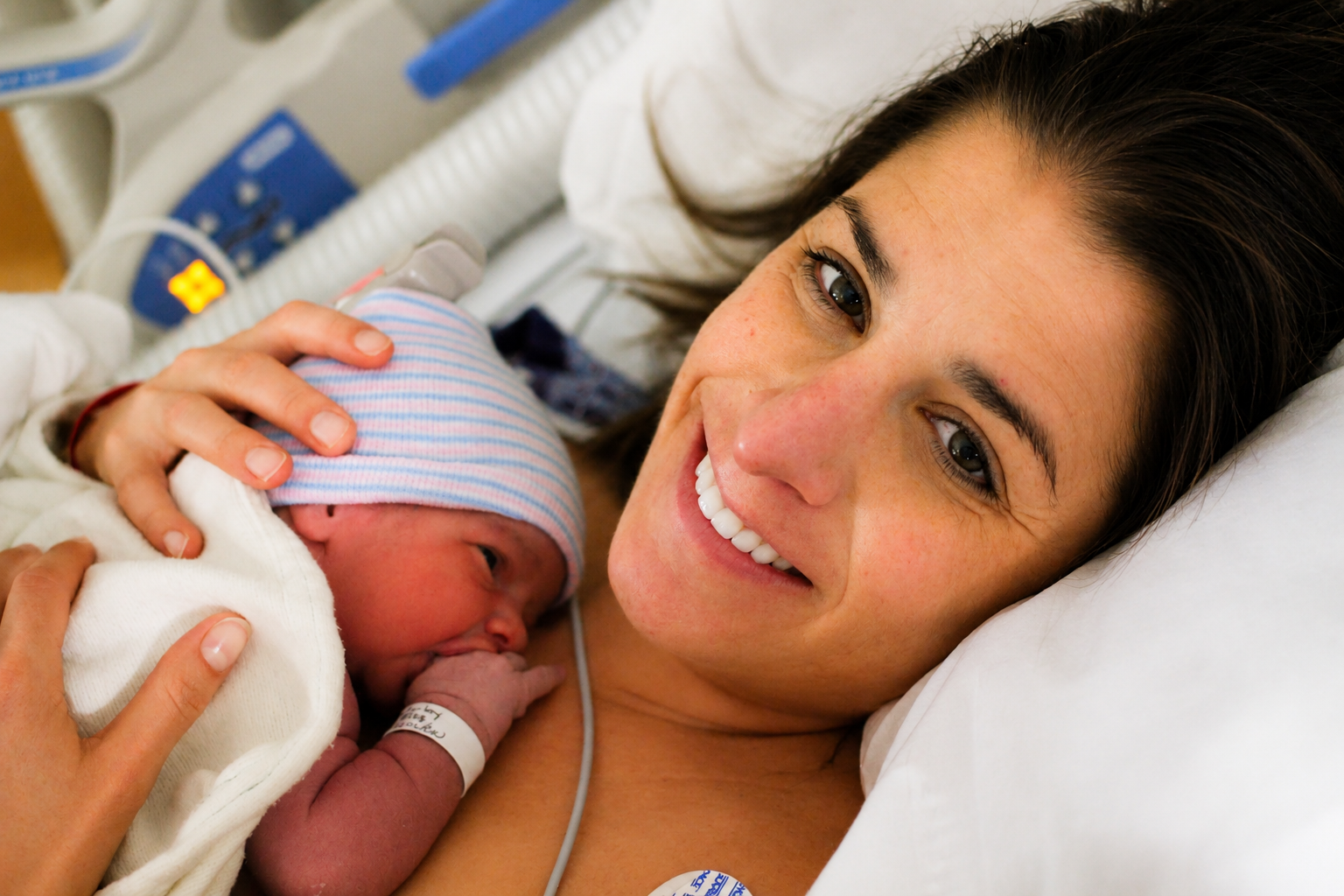
Me holding my first-born son who will later be diagnosed with autism.
What First-Time Parents Need Most
When a first-time parent receives a diagnosis, they do not just need information about Down syndrome.
They need perspective.
They need context.
They need honesty.
They need compassion.
They need to understand that every parent enters this journey carrying fears.
And that many of the things they are worried about today may look very different years from now.
They need balanced information that acknowledges both challenges and possibilities.
Most importantly, they need to know that a diagnosis does not erase the joys of parenthood.
The first smile.
The first steps.
The bedtime stories.
The vacations.
The baseball games.
The laughter.
The pride.
The love.
Those things do not disappear because of a diagnosis.
A Different Path Is Not a Lesser Path
Perhaps the greatest challenge for first-time parents is the feeling that the future they imagined has been taken away.
I understand that feeling.
Many parents do.
But over time, something remarkable often happens.
The imagined future fades.
The real child emerges.
And parents begin building a future around who that child actually is rather than who they expected them to be.
That future may look different.
But different is not the same as worse.
Different is not the same as hopeless.
Different is not the same as loss.
It is simply a different path.
And for many families, it becomes a path filled with love, growth, connection, and meaning they never could have imagined at the moment of diagnosis.
That is the First-Time Parent Paradox.
The parents with the least experience to understand what lies ahead are often the ones carrying the greatest fear.
And yet, like generations of parents before them, they may discover that parenthood—and their child—is far more beautiful than they ever expected.
Related articles:
10 Things I Wish Someone Told Me when I was pregnant
The Space Between: What Happens Between Diagnosis and Decision?
What I Expected vs. What I Experienced Raising a Child with Down Syndrome
Why Parents Remember the Diagnosis Conversation for Years
Outdated Stereotypes That Still Shape Modern Down Syndrome Diagnoses
The Down Syndrome Generation No One Predicted
What happens after a positive NIPT test?
The First-Time Parent Paradox: Why a Down Syndrome Diagnosis May Feel Different When You've Never Been a Parent Before
Sibling & Family Relationships: Understanding the Weight of the Word "Burden" & Down Syndrome
Positive NIPT for Down Syndrome: A Plain-English Guide for Terrified Parents
Help other families find balanced information by sharing this article.