Positive NIPT for Down Syndrome: A Plain-English Guide for Terrified Parents

New parents hold an ultrasound photo.
Part 1: The 5-Minute Cheat Sheet
If You Read Nothing Else, Read This
1. A Positive NIPT Is NOT a Diagnosis
The biggest misunderstanding online is that a positive NIPT means your baby definitely has Down syndrome.
It does not.
NIPT is a screening test.
A screening test tells you whether your pregnancy deserves a closer look.
A diagnostic test tells you for certain.
Think of it this way:
If your smoke detector goes off, it means there might be a fire.
It does not prove there is a fire.
A positive NIPT is the smoke detector.
An amniocentesis or CVS is the fire investigator.
2. False Positives Happen
This surprises many parents.
NIPT is extremely accurate, but it is not perfect.
Some positive results turn out to be false positives.
That means the test suggested Down syndrome was present, but diagnostic testing later showed the baby did not have Down syndrome.
This is why doctors recommend confirmatory testing.
3. Your Age Matters More Than Most Articles Explain
A positive NIPT result means different things for different people.
For example:
A 42-year-old mother with a positive result has a much higher chance of a true positive than a 22-year-old mother with the exact same result.
Why?
Because Down syndrome is naturally more common in older pregnancies.
Many online articles don't explain this clearly.
4. The Placenta Can Cause Confusing Results
This is one of the strangest facts about NIPT.
The test doesn't actually examine the baby.
It examines DNA shed from the placenta.
Most of the time the placenta accurately reflects the baby's chromosomes.
Sometimes it doesn't.
This is one reason false positives can occur.
5. Most Positive NIPT Parents Spend Weeks in Limbo
This may be the hardest part.
Not knowing.
Waiting.
Searching.
Reading.
Wondering.
Parents often spend days or weeks trying to imagine a future they suddenly feel uncertain about.
At the 1st Voice Project, we call this The Space Between.
The period between diagnosis and decision.
Between fear and understanding.
Between expectation and reality.
Common Google Searches Answered
Can NIPT Be Wrong?
Yes.
It can produce false positives and false negatives.
This is why it is considered a screening test rather than a diagnostic test.
Should I Get an Amniocentesis?
That's a personal decision.
Amniocentesis is the test that can tell you with near certainty whether your baby has Down syndrome.
Some parents want certainty.
Others prefer to wait until birth.
Neither decision is right or wrong.
Does a Positive NIPT Mean My Baby Will Have Health Problems?
Not necessarily.
Even among babies with Down syndrome, experiences vary dramatically.
Some children have significant medical needs.
Others have relatively few.
There is no prenatal test that can predict personality, happiness, relationships, kindness, humor, determination, or the impact that child may have on your family.
Part 2: My Perspective
When I received my positive NIPT result, I wasn't searching for statistics.
I was searching for certainty.
I wanted someone to tell me what my future looked like.
Instead, I found medical journals, risk calculations, chromosome diagrams, and words that felt impossible to understand while I was crying in my car.
Looking back now, I realize I wasn't actually looking for information.
I was looking for hope.
I was looking for another parent who had stood where I was standing and could tell me that life wasn't over.
That motherhood wasn't over.
That joy wasn't over.
That my baby wasn't a tragedy.
I spent a lot of time worrying in the days, weeks, and months leading up to the birth of my son. To be honest, worrying is an understatement—I was terrified. I was afraid of the unknown. I was afraid of what Down syndrome might mean for my child, my family, and my future. I questioned whether I was strong enough. I questioned whether I was capable enough. I questioned whether I could handle what was coming.
What I experienced after my son was born was nothing like I had imagined.
The fears that consumed me during pregnancy did not match the reality I found on the other side.
My son was not a diagnosis.
He was not a statistic.
He was not a list of possible complications.
He was a baby.
My baby.
And from the moment I held him, I loved him exactly as I loved my other children.
Over time, many of the things I feared most simply never came to pass. The future I had imagined during those long months of uncertainty looked nothing like the future that unfolded before me.
Today, my son brings joy, laughter, perspective, and meaning to our family in ways I could never have predicted when I first received that test result.
No matter where you are in your journey, I want you to know this:
You will get through this.
The fear you feel today will not last forever.
The uncertainty you feel today will not last forever.
And whatever decision you make, you deserve compassion, support, and understanding as you navigate one of the most difficult moments of your life.
If your journey includes welcoming a child with Down syndrome, please know that there is a community here waiting for you.
A community of parents who remember exactly what it felt like to sit where you are sitting now.
A community that understands the fear, the questions, the grief, the hope, and everything in between.
Please find us.
We welcome you with open arms.
You do not have to walk this path alone.
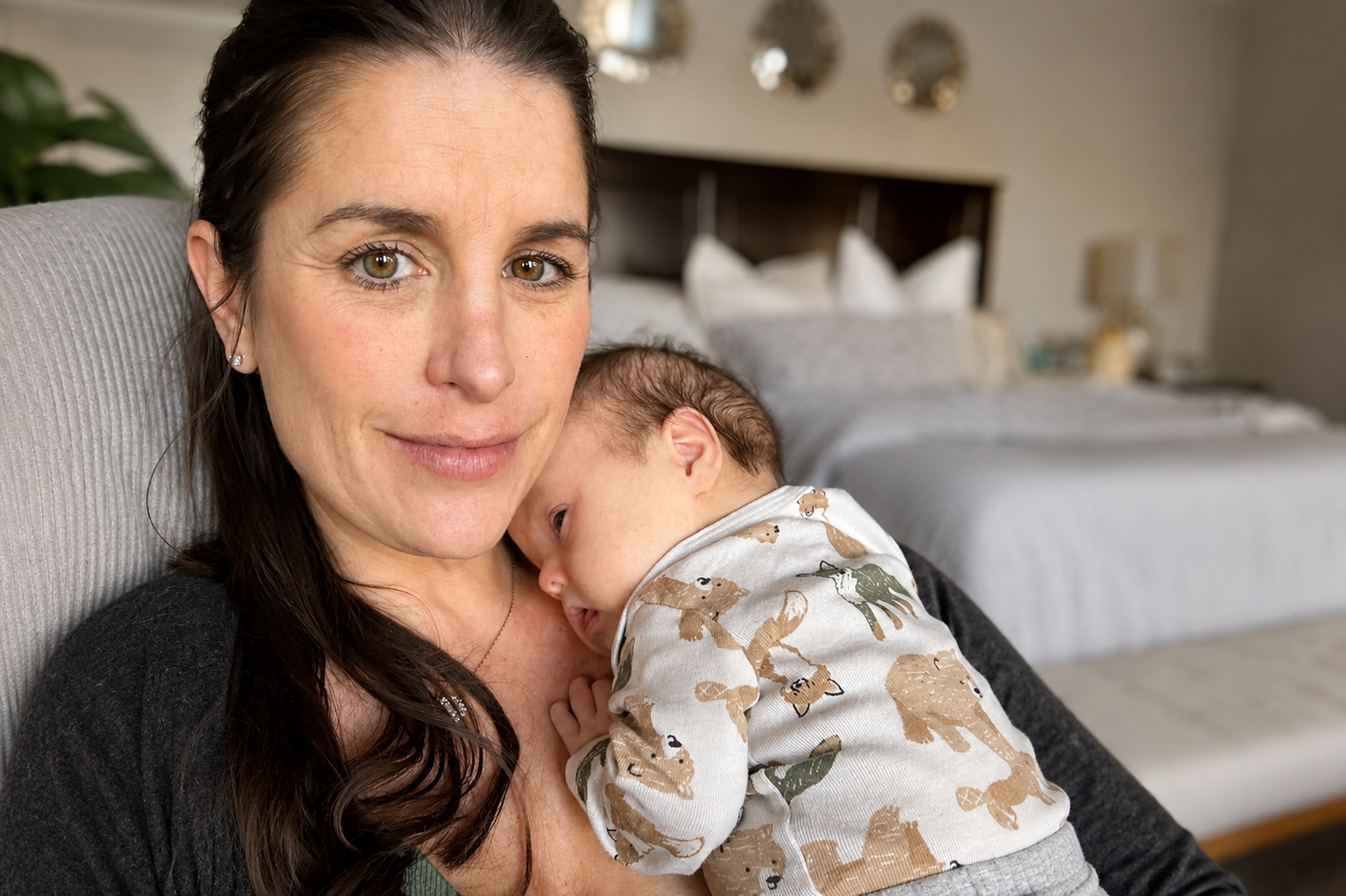
Me and the “best worst thing that ever happened to me.”
A note from 1st Voice Project:
If you’ve just received a positive prenatal screening test result, please visit our page for resources and support. If you’d like to talk, feel free to reach out.
If you’ve received a prenatal diagnosis, the 1st Voice Project would love to hear your thoughts and experiences. Please take a few minutes to contribute to our work by completing our survey.
Related articles:
10 Things I Wish Someone Told Me when I was pregnant
The Space Between: What Happens Between Diagnosis and Decision?
What I Expected vs. What I Experienced Raising a Child with Down Syndrome
Why Parents Remember the Diagnosis Conversation for Years
Outdated Stereotypes That Still Shape Modern Down Syndrome Diagnoses
The Down Syndrome Generation No One Predicted
What happens after a positive NIPT test?
The First-Time Parent Paradox: Why a Down Syndrome Diagnosis May Feel Different When You've Never Been a Parent Before
Sibling & Family Relationships: Understanding the Weight of the Word "Burden" & Down Syndrome
Help other families find balanced information by sharing this article.